Introduction
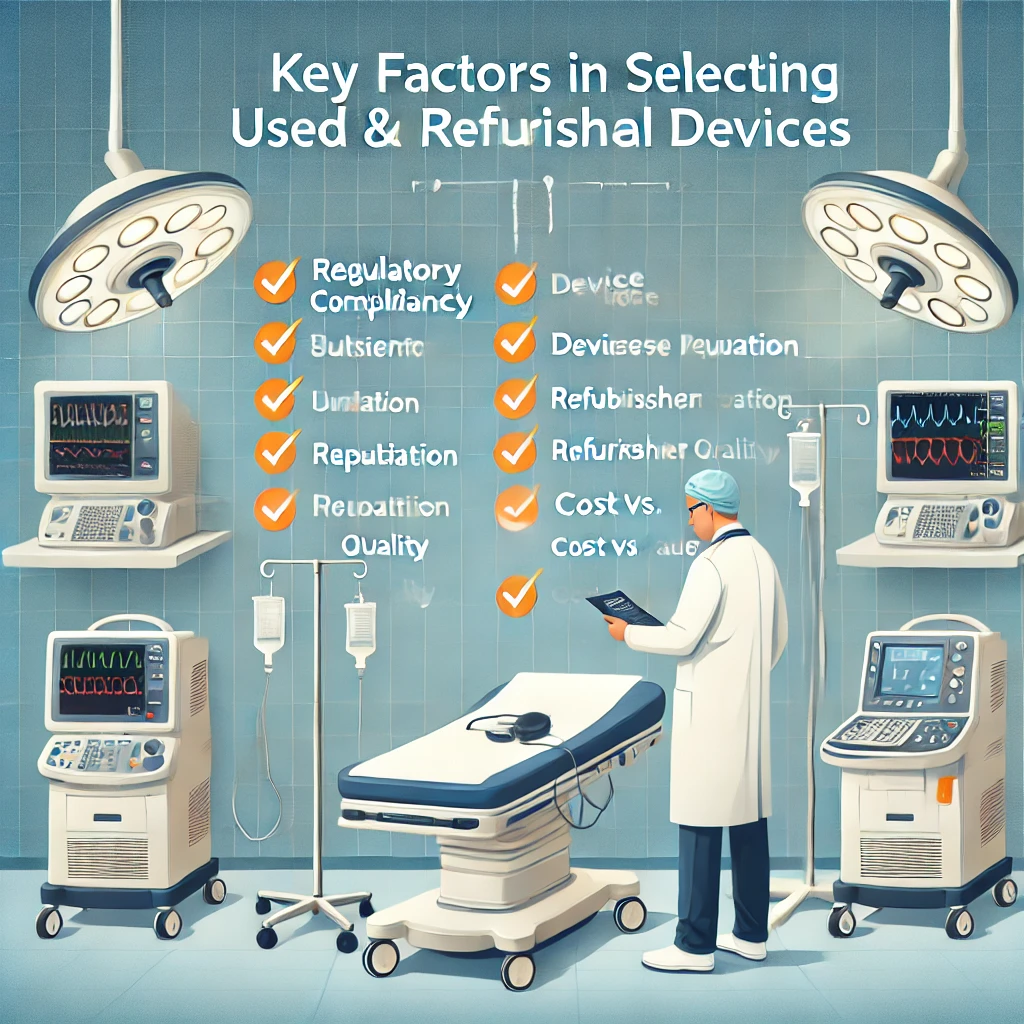
Purchasing used or refurbished medical devices can be a cost-effective and sustainable solution for healthcare facilities, clinics, and private practitioners. However, selecting the right equipment requires careful evaluation to ensure safety, efficiency, and compliance with regulatory standards. This guide outlines the key factors to consider when choosing used and refurbished medical devices.
1. Understanding the Difference: Used vs. Refurbished
Before purchasing, it is crucial to differentiate between used and refurbished medical devices:
- Used Medical Devices: These are previously owned and sold in their existing condition, often without repairs or upgrades.
- Refurbished Medical Devices: These devices undergo thorough inspection, repair, recalibration, and testing to restore them to manufacturer or industry standards.
Refurbished devices typically offer more reliability and better performance than used ones, making them a preferred choice for many healthcare providers.
2. Compliance with Regulatory Standards
Medical devices must comply with local and international regulations to ensure they are safe and effective. Check for certifications such as:
- FDA (U.S. Food and Drug Administration) approval for devices used in the U.S.
- CE Marking (Conformité Européenne) for compliance with European standards.
- ISO 13485 Certification, which ensures adherence to quality management systems for medical devices.
- TGA (Therapeutic Goods Administration) approval for Australian buyers.
3. Reputation of the Seller or Supplier
Choose a reputable supplier or vendor with a track record of providing high-quality used and refurbished medical devices. Consider:
- Customer Reviews & Testimonials: Check online reviews or ask for references from previous buyers.
- Certifications & Accreditation: Look for ISO-certified refurbishers and authorized dealers.
- Warranty & Return Policy: Ensure the supplier offers a warranty or return policy for added security.
4. Device Condition and Age
Assess the condition of the device before purchasing:
- Year of Manufacture: Older devices may lack necessary updates or support.
- Usage History: Request maintenance and service records to understand previous wear and tear.
- Remaining Lifespan: Ensure the device has sufficient functional lifespan left for your needs.
5. Quality of Refurbishment Process
If opting for a refurbished device, inquire about the refurbishment process. A high-quality refurbishment should include:
- Component Replacement: Faulty or worn-out parts should be replaced.
- Software Updates: Ensure the latest software versions and patches are installed.
- Calibration & Testing: The device should undergo rigorous testing to confirm accuracy and reliability.
- Cleaning & Sterilization: Especially important for devices that come into direct contact with patients.
6. Technical Support & Maintenance Services
Check whether the supplier offers after-sales support and maintenance services. Consider:
- Availability of Spare Parts: Ensure that replacement parts are accessible if needed.
- Technical Support: Look for providers that offer remote or on-site troubleshooting.
- Maintenance Contracts: Some suppliers provide service agreements to maintain device performance.
7. Cost vs. Value
While cost savings are a key advantage of used and refurbished devices, focus on overall value rather than just the price:
- Total Cost of Ownership (TCO): Factor in maintenance, repair, and operational costs.
- Warranty & Support Services: A slightly higher upfront cost may be justified by longer warranties and better service options.
- Return on Investment (ROI): Consider how much the device will contribute to your practice’s efficiency and profitability.
8. Compatibility & Integration with Existing Systems
Ensure that the refurbished or used device is compatible with your existing infrastructure:
- Software & Data Integration: The device should be compatible with your current electronic medical records (EMR) or imaging systems.
- Accessory & Peripheral Compatibility: Verify if the device supports necessary add-ons or accessories.
9. Risk Assessment & Liability Considerations
Used medical devices come with potential risks. To mitigate liability concerns:
- Verify the Source: Ensure that the device is sourced legally and not from unauthorized resellers.
- Check Insurance Coverage: Some insurers may have restrictions on coverage for used equipment.
- Inspect for Recalls: Cross-check the device model against recall databases to avoid faulty equipment.
10. Training & User Proficiency
If the device requires specialized operation, confirm that your staff is trained or that training is available. Some suppliers offer:
- On-site or virtual training sessions
- User manuals and instructional videos
- Technical support hotlines for troubleshooting
Conclusion
Purchasing used or refurbished medical devices can be a wise investment when done correctly. By considering factors such as regulatory compliance, refurbishment quality, supplier reputation, and long-term costs, healthcare providers can ensure they acquire reliable and safe equipment. Always conduct thorough due diligence before making a purchase to safeguard patient safety and operational efficiency.